
E-Commerce Tips
CRM for Shopping Malls: Why Standard CRMs Fall Short
Most CRMs serve one retailer. A mall needs every tenant collecting points, running their own offers, and proving event footfall. Here's what that takes.
Danny Khow, Co-Founder & Managing Director5 min read
A CRM that suits a shopping mall has to do three things: let every tenant collect points at its own till, give each tenant a loyalty tool of its own, and show how many people an event actually brought in. Bridzia's Loyalty CRM does all three through a built-in feature called Store PWA. Most CRMs on the market don't, because they were designed around a single retailer that owns its tills and its customer data.
Why a mall is a different problem
A retailer running a loyalty programme controls the whole transaction. It owns the till, the customer data and the points budget. A mall owns none of that. The mall sells space, and the sales happen across dozens or hundreds of independent tenants, each with its own point-of-sale system and its own opinion of what a loyalty programme is worth.
A CRM built for one retailer assumes that retailer's staff will scan, award and redeem everything. In a mall, that assumption fails on day one. The people at the counter work for someone else.
| What a mall needs | Typical single-retailer CRM | Bridzia Loyalty CRM |
|---|---|---|
| Points collected at every tenant's counter | Points are awarded through the retailer's own POS or app | Store PWA lets any tenant help a customer collect points from a browser |
| No integration with tenant POS systems | Sales data usually comes from a POS integration, one project per tenant | Store PWA needs no POS integration, so the mall avoids that cost and delay |
| Fast rollout across many stores | Slows down with every tenant added | Any cashier can use Store PWA on a smartphone |
| A reason for tenants to join | One programme, owned by the brand | Tenants can run their own campaigns, such as a stamp card, on the same counter |
| Events that drive footfall | Campaign clicks and opens | Event registration, linked games, and prizes claimed by attending |
| Control over who awards points | Built for one company's own staff | Rules on who can award points, and a record of who did |
| Engagement beyond points | Points and vouchers | Daily check-in, spin the wheel, claw machine, live LED screen games and AR games |
What Store PWA is
Store PWA is the store counter function in Bridzia's Loyalty CRM. It is a progressive web app, so it runs in a web browser on a smartphone instead of needing a new system installed at the till. Any tenant cashier can open it, identify the member and help them collect points. It is a standard part of the CRM, not a custom build or an add-on module.
The main benefit is that the mall does not have to integrate with each tenant's POS to get sales data and let members collect points. Integrating dozens or hundreds of different POS systems is slow and expensive, and it is usually the reason mall-wide programmes take so long to launch. With Store PWA, a mall CRM can be deployed quickly, because a cashier with a smartphone is all a tenant needs.
That matters in a mall, where the tenant list ranges from a national chain with an IT team to a kiosk owner with one phone. A tool that needs a POS integration will reach the first group and miss the second.
Giving tenants something of their own
Asking a tenant to collect points for the mall's programme is asking them to do work for someone else's benefit. A mall CRM has to answer the tenant's question: what do I get out of this?
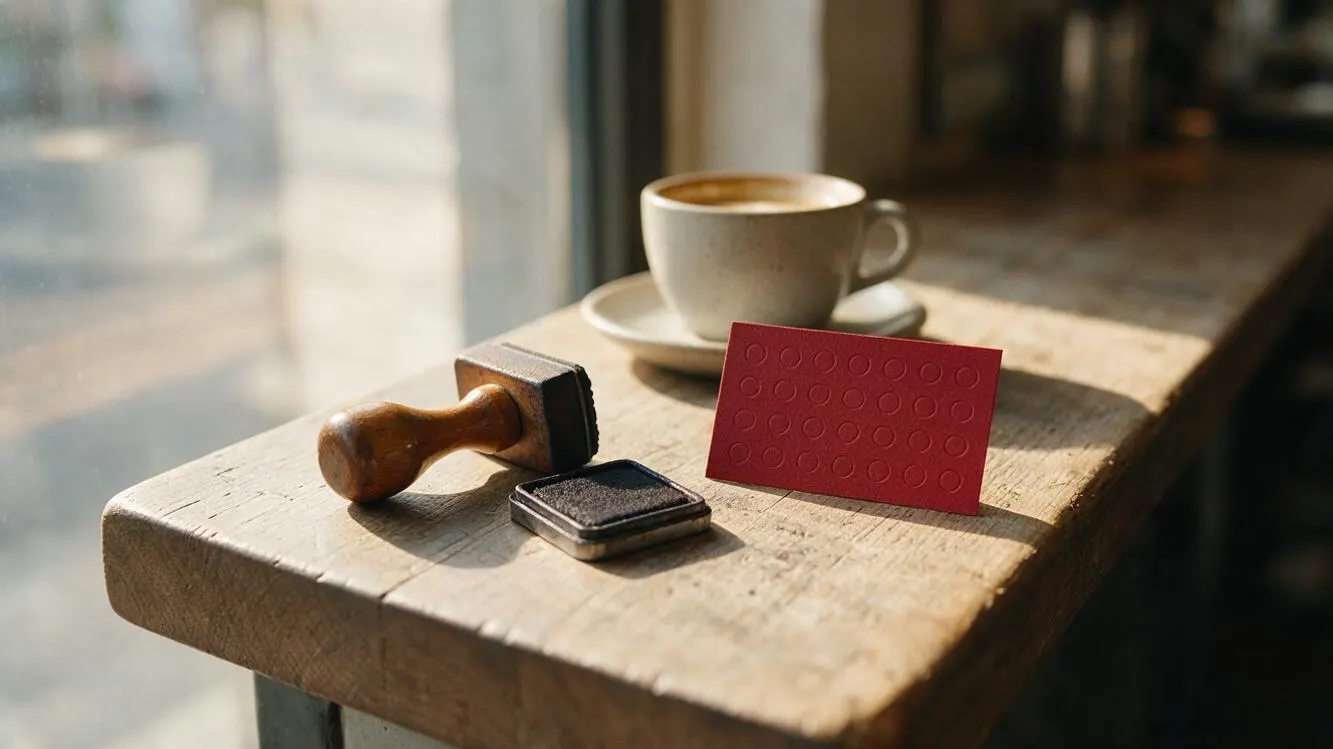
With Store PWA, mall stores can run their own loyalty campaigns on the same counter. A cafe, for example, can run a stamp collection that gives away a free cake after 5 purchases. The tenant designs it around its own margins and its own regulars. The mall-wide programme stops being a favour to the landlord and becomes a tool the tenant wants to use.
Events that bring people in and can be counted
Malls rent out event space, and the usual pitch is general footfall. A stronger pitch is a way to bring people to this specific event and to show afterwards that it worked.
In Bridzia's Loyalty CRM, the mall can create events and members can register for them, with or without points. An event can then be linked to a game:
- The mall promotes the event to members, with a push message.
- Members play the linked game and can win a prize.
- They can only claim the prize by attending the event.
The game gives people a reason to open the message and play, and the claim requirement gives them a reason to show up. That drives footfall to the event, and registrations and claims give the mall numbers to report instead of estimates. It turns event space from a rental into a package: the venue, a promotion channel and measurable attendance.

Games that keep members engaged
The games come from our gamification service and can be used on their own or linked to an event.
Daily check-in
Rewards members for coming back regularly.
Spin the wheel
Claw machine
LED screen games
Played live on a big screen TV in the mall.
Augmented reality (AR) games
All of them are there to raise engagement with the mall, not just to hand out rewards.
What to ask any vendor before choosing a mall CRM
How do tenants collect points?
If the answer involves integrating each tenant’s POS, expect slow rollout and a long tail of tenants who never join.
What does a tenant get?
If the only benefit goes to the mall, participation will depend on pressure rather than interest.
Who funds the points?
Decide whether the mall, the tenant or both carry the cost, and tell tenants before you ask them to join.
How is misuse controlled?
Any system where staff award points needs limits on who can award how many, and a record of who did.
What do tenants see afterwards?
Decide whether tenants get their own results or only the mall’s overall numbers.
Can you prove event attendance?
Ask for a recorded visit, not a campaign open rate.
Frequently asked questions
If you're planning a loyalty programme for a mall or a multi-tenant property, talk to us about Loyalty CRM. We've also written about what makes gamification drive repeat engagement.
Keep reading
Related articles
More on platforms, integration, and how buyers find brands.
E-Commerce Tips
Do You Actually Need a Huawei AppGallery App?
Huawei phones have no Google Play Store, so a separate app looks obvious. Fewer than 5% of users install ours. Here's why we usually advise against it.
Read the article
E-Commerce Tips
Mobile App + Loyalty CRM: Why They Should Be Built Together
Bolt loyalty onto a separate app and website and two things break: customer identity stops matching, and the channel that doesn't reward loses sales.
Read the article
E-Commerce Tips
Gamification in Loyalty Programmes: What Actually Increases Engagement
Only 5% of eligible users registered for one gamified campaign we ran, but 99.7% of those who did played, most more than once. What that funnel reveals.
Read the article