
Case study
McDonald's Scratch & Win
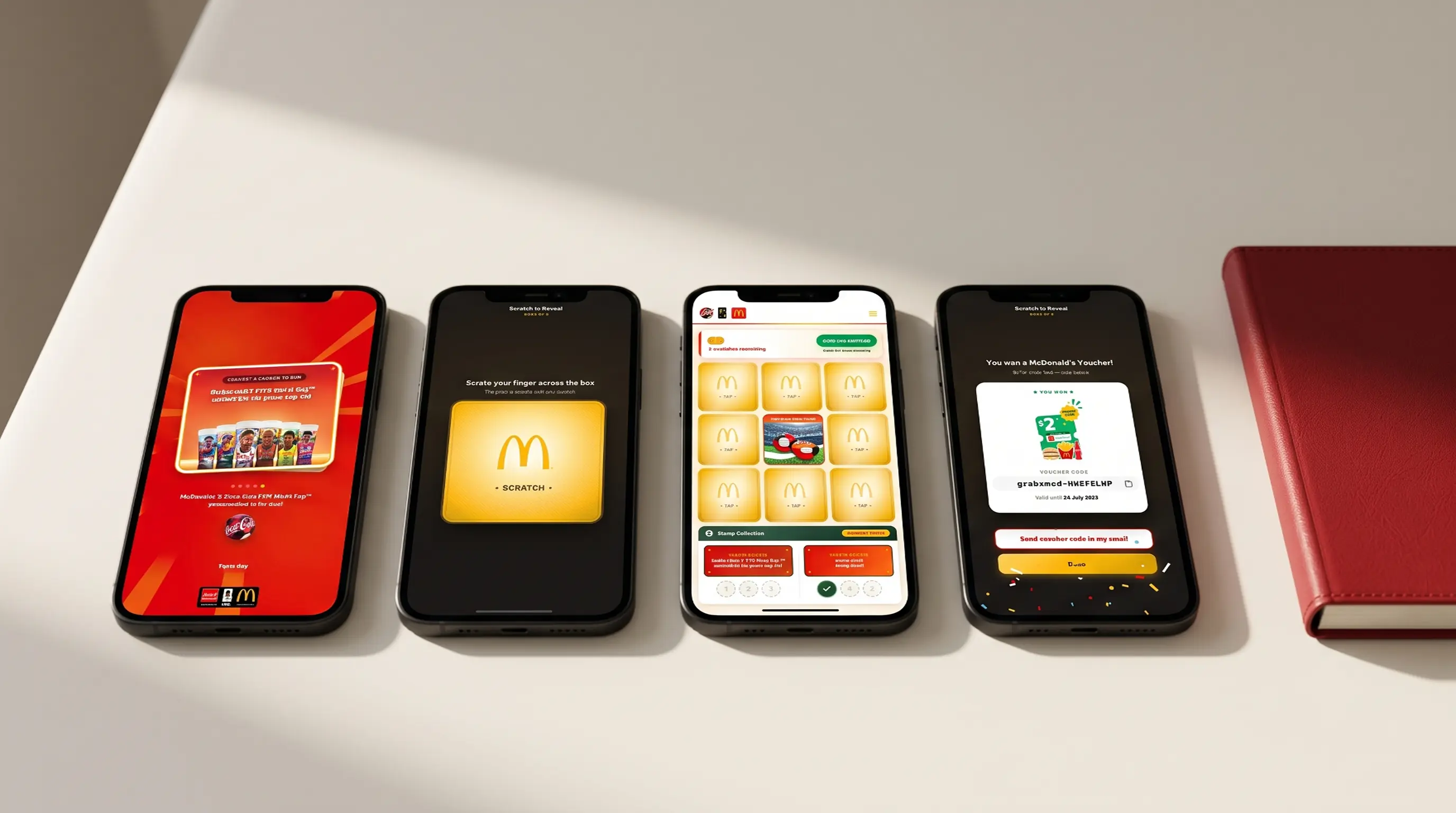
A nine-box scratch card wired directly into GrabFood ordering, built for a McDonald's × Coca-Cola × FIFA World Cup 2026™ campaign — every order earned another chance to play.
Snapshot
At a glance
- Client
- McDonald's
- Industry
- F&B / QSR
- Partnership
- 7-week campaign
- Published
- Services
- Gamification
Results
Headline numbers
- Broad reach
- exposure ran at scale across the eligible Grab audience
- Strong registration conversion
- a healthy share of that reach converted into registered players
- High engagement rate
- registration reliably carried through into people actually playing
- High win rate
- the large majority of scratches returned a voucher or a collectible stamp, not a “miss”
- Balanced reward mix
- both instant vouchers and long-term collectibles saw healthy uptake
- Repeat engagement
- many players scratched more than once, pointing to GrabFood orders unlocking extra chances
The challenge
McDonald's and Coca-Cola's FIFA World Cup 2026™ partnership came with premium collectible merchandise and voucher inventory to give away through Grab — but a static banner or single coupon code converts once and gets forgotten. The campaign needed a mechanic that rewarded people for playing, rewarded them more for ordering, and made returning to the app a habit across the multi-week tournament build-up, not a one-off click.
The solution
Bridzia designed and built Scratch & Win, a nine-box scratch card wired directly into GrabFood ordering. Every player got a free scratch just for registering, and every McDonald’s order placed through GrabFood earned another. Each scratch revealed one of four outcomes — an instant GrabFood voucher, a collectible stamp toward a Snack Bowl or Cup Set, or a near-miss “Yellow Card”/“Red Card” — framed in the campaign’s own football language so even the miss states stayed on-theme. Three matching stamps unlocked a piece of official World Cup merchandise, keeping the rarest prizes aspirational rather than instantly handed out.
The mechanic’s core move was putting the “Order via GrabFood” button on the same screen as the game board rather than a separate page, so the moment a player ran out of scratches was the exact moment they saw how to get more — turning ordering into the resource that fuelled replay, not a footnote to the game.
The results
The reveal mix held up on quality, not just volume — the large majority of scratches returned a voucher or a stamp rather than a miss, with both instant vouchers and long-term collectibles seeing healthy uptake. Performance didn’t taper off after launch: weekly reach continued to scale, registration-to-play conversion held its shape week over week, and prize activity kept building at a steady pace throughout the campaign. Repeat scratching — driven by GrabFood orders unlocking new plays — pointed to the order-to-game loop working as designed.
Have a similar challenge?
Tell us where you are today and what you are trying to reach.